How to Navigate Your First Job After Graduation
In Conversation with: Professor Emilia Onyema, LLB, LLM, PhD
Professor of International Commercial Law at SOAS University of London, Author, Legal scholar, and cool aunt. In this interview, she talks about how people can lessen anxiety after leaving school and what life should ideally look like after graduation.
C: Today, I have here my aunt Emilia, who will help guide us through the often confusing transition into the workplace. I remember when applying to college, she gave me the invaluable advice that you’re not expected to have your whole life figured out before starting undergrad, and yes, that may include what you want your major to be in college. The goal should be taking courses that mirror your interests and curiosities, as that will help you figure out your major, career path, and ultimately who you are, and what you want to become. In this conversation, she’s lending her wisdom again for people like myself who’ve graduated from university and entered (or are currently entering) the workplace for the first time.
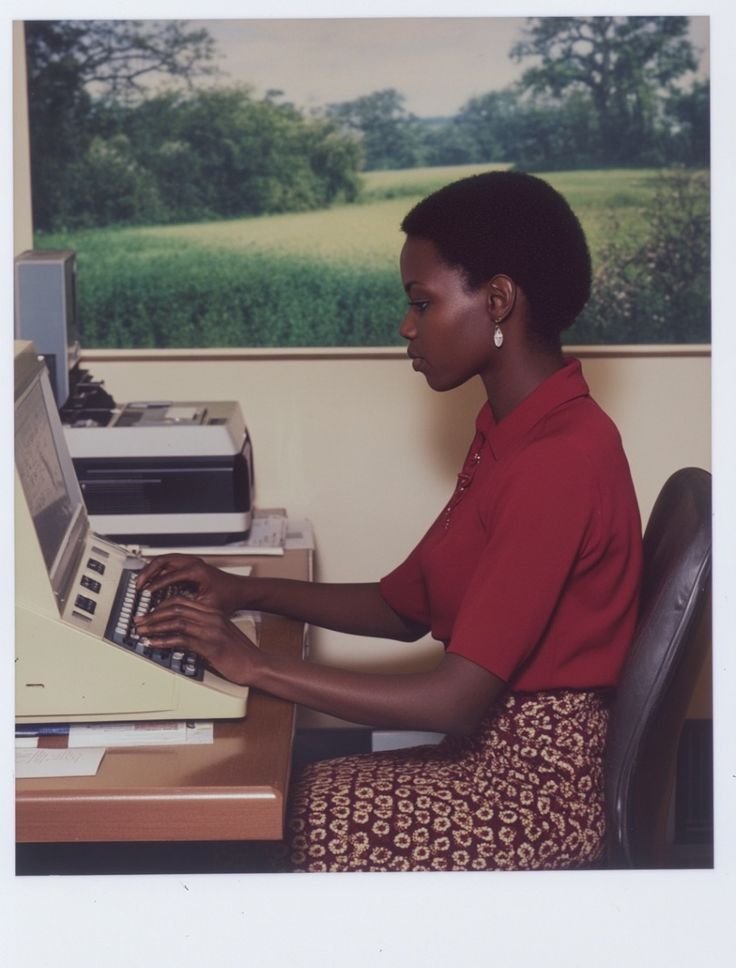
C: What advice can you offer us that are still relatively new to corporate after graduation?
E: Think of your first post-school job as an opportunity to learn, grow, and figure out what suits you. You don’t have to go in thinking you’ll be there for the next 100 years. You might be there for one or two years and realize it’s not for you. Companies understand this, which is why many offer graduate programs. And if it doesn’t work out, it’s not always about the industry—it could simply be the team or environment that isn’t right for you.
C: That’s true, especially considering most people start to see what teamwork is really about when they start a full-time job.
E: Exactly. Most people just entering the workplace don’t have much experience with that. Before work, your group of friends is sort of your team - the people you choose to spend time with. At work, you’re paired with people you don't know. Some, you would flow well with, others not so much. But you still have to work together to get the job done - your paycheck also requires this of you. Through that process, you learn from each other, grow as a professional, and also learn more about yourself - especially what you can handle and how you work with different personalities.

C: What happens when you figure out that setting or job isn’t for you? What’s the ideal path forward there?
E: I’d say you’d need to allow yourself the freedom to evolve. We're human beings, our palettes change, we grow. You might feel that marketing is the thing for you now, but in five years time, it might be compliance or something else. In that case, if there’s an opening in your current place of work, the goal is to try and apply for that. If your current job however does not provide an opportunity for you to do something different, especially if it's affecting your well being and self worth, then it's time to look outside of that company, and see if you can find an opening that speaks to where you are currently. The fact is, most of us don't know exactly what it is we want to do when we get our first degree from university. We need to give ourselves the permission and freedom to learn as much as we can in our current role, and be willing to move somewhere else if necessary.
C: That’s incredibly helpful. I can’t help but think of people who need a job - any job, notwithstanding what it is. In the context of everything we’ve talked about so far, what is your message to people in that situation?
E: For people who need the job - they need income from their work and that might be what determines whether they stay or move on. In that case, they can't even see the job, all they see is the paycheck at the end of the month. In my humble opinion, it's very unhelpful to be in that situation, because it's one of disempowerment. We're created to create, and think of how life can be easier and better for people. Creation is to leave anywhere we go, better than we found it. As a professor, I’d think ‘how can I make my students learn better? How can I improve their opportunities in getting into a good place to work, and getting the best grades that they can?’ But if you're only thinking of your salary at the end of the month, you can't be creative, therefore you're doing yourself a disservice. Anybody going through that needs to restructure their finances in such a way that they can get by and break even until they get into a job where they can think, create, and it's not a need. It’s important to do so because your work, in my view, is an extension of who you are and your humanity.






C: What about choosing where to work—not just the job, but the location?
E: The world today is more globally mobile. The workforce is a global workforce - you can live anywhere, you can work anywhere. While this is technically true on paper, our lives are not just work —you also have to think about family, relationships, and personal comfort. For example, if you have a partner, children, or aging parents, those factors matter. Some places may offer fantastic salaries, but you might not feel comfortable living there. When I visit a place, I ask myself: ‘can I live here? And for quite a lot of places, the answer is no. I don't mind being there for a week to do my work, conference or whatever it is, then go back home. It's important to understand where ‘home’ is for you at this point in time.
Quite a lot of young professionals move between countries for a few years at a time, and that’s completely fine. Others let their careers guide where they go, and that’s fine too. What matters most is choosing a place that fits your lifestyle and needs. For example, living in central London works well for me because it makes commuting and travel easier for my job. So I'm pretty much comfortable where I am with what I am doing currently. That said, I do think younger professionals should be open to moving around. There's a lot to see and experience in life. In today’s world, you can choose to live in Singapore for a few years, have a job that takes you to Beijing, Paris, London - and that can be incredibly valuable. It’ll bring new perspectives and experiences that can only help you grow.
C: Some people struggle with confidence when they first come into the workforce. They may feel ‘I'm too young to have a say in ‘X, Y, Z’ conversations’. But despite being the most junior person in a team when you’re fresh out of college, you have a voice, just like every other person in the world. Understand there are people who don’t necessarily believe that or know how to use that voice. What suggestions would you have for young professionals in this regard?
E: That’s the tension between being confident, knowing your stuff, and when the right time is to say something. That's one angle. The other angle is how does your direct report react? Are they the type of person that encourages you to think and say something? And if you are wrong, do they dismiss you or give constructive feedback? It’s important to understand your boss’ style. You don’t want to come across as disrespectful, undermine them, or seem like you’re showing off. There’s also nothing wrong with asking them directly whether they’re open to your ideas in meetings, or if they’d prefer you share thoughts one-on-one. That can be especially helpful if you’re still figuring out how they lead.